 by
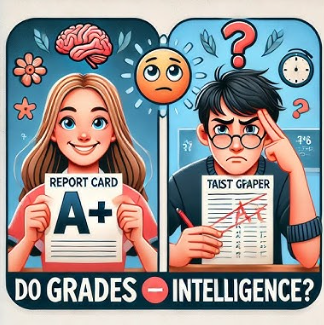
by Marks may reflect academic performance, but do they define intelligence? Learn the hidden difference between grades and true ability.
Growing up as a student, I heard the same thing over and over again:
“Get good marks.”
Marks were celebrated. Marks were compared. Marks were discussed at family gatherings. Marks seemed to determine who was “smart” and who wasn’t.
And for a long time, I believed it too.
Whenever I scored well, I felt intelligent.
Whenever I scored less than expected, I questioned myself.
But one day, I started wondering:

Can a few numbers printed on a report card really measure the intelligence of an entire human being?
Can a three-hour exam measure years of curiosity, creativity, and learning?
Can a sheet of paper predict who will become a great scientist, artist, entrepreneur, athlete, or leader?
The more I thought about it, the more I realized something important.
Marks can measure how well you performed in a particular exam on a particular day.
But intelligence is much bigger than that.
Think about it.
A student might score 95% in Mathematics but struggle to communicate confidently in public.
Another student might score average marks but possess extraordinary creativity.
Someone else might not top the class but could be an exceptional leader, artist, entrepreneur, athlete, or problem-solver.
If intelligence were only about marks, then every topper would become successful and every average student would fail.
But real life doesn’t work that way.
Look around the world.
Some of the most successful people were not always the highest scorers in school.
What made them special was their curiosity, persistence, creativity, communication skills, and ability to learn from failures.
These qualities rarely appear on a report card.
The truth is that marks measure academic performance.
They do not measure kindness.
They do not measure creativity.
They do not measure leadership.
They do not measure courage.
And they certainly do not measure your full potential.
Now, before anyone misunderstands me, let me make something clear.
Marks are important.
They help us evaluate our understanding of subjects.
They open doors to opportunities.
They encourage discipline and hard work.
But they should never become the only measure of self-worth.
The problem begins when students start believing that a low score means they are unintelligent.
I have seen students cry because of a few marks.
I have seen talented students lose confidence because they compared themselves to others.
I have seen people forget their strengths simply because a report card told them they were “average.”
But no examination paper can fully measure what you are capable of becoming.
An exam tests what you know.
Life tests what you can do with what you know.
And those are two very different things.
Imagine judging a fish by its ability to climb a tree.
It would spend its entire life believing it was a failure.
In the same way, every student has unique strengths.
Some shine in academics.
Some shine in sports.
Some shine in arts.
Some shine in leadership.
Some shine in innovation.
The world needs all of them.
Your marks may tell a small part of your story.
But they can never tell the whole story.
So if your marks are excellent, be proud—but stay humble.
And if your marks are lower than expected, don’t let a number decide your worth.
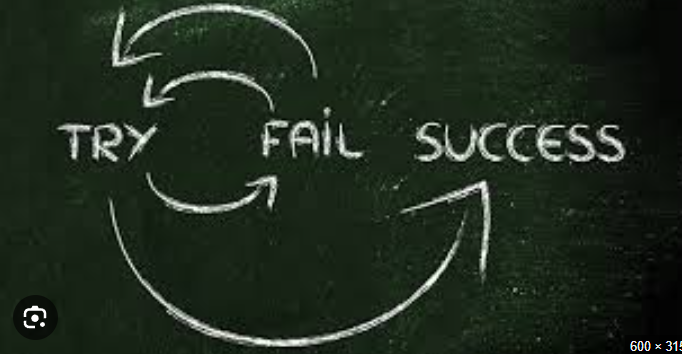
Use it as feedback.
Learn from it.
Improve.
Move forward.
Because intelligence is not about being better than everyone else.
It is about learning, growing, adapting, and becoming a better version of yourself every day.
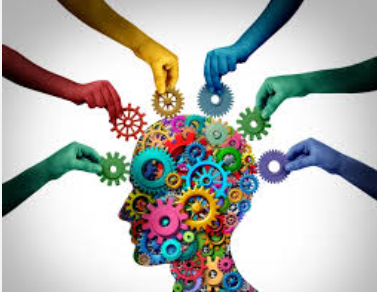
A report card can measure your performance. An exam can measure your preparation. But neither can measure your dreams, your determination, your creativity, or your potential. So the next time someone asks whether marks define intelligence, remember this: marks may reflect what you know today, but they can never define what you are capable of achieving tomorrow.
Marks may open some doors, but intelligence is what helps you walk through them and create new ones.
Click for reading a beautiful story on this respective topic